Capturing and destroying PFAS in water.
Memb-CAP couples electrospun nanofiber membranes with cold atmospheric plasma to remove — and then break down — the forever chemicals conventional treatment leaves behind.
Treatment concept
Project mission
Treatment that destroys, rather than displaces
Per- and polyfluoroalkyl substances (PFAS) are among the most persistent contaminants in the water cycle. The carbon–fluorine bond that makes them so useful industrially is also one of the strongest in organic chemistry, and it allows these compounds to pass through conventional treatment plants essentially unchanged.
Established options such as adsorption and pressure-driven membrane filtration can separate PFAS from water very effectively — but they do not eliminate them. The contaminant is transferred to a spent sorbent or a concentrate stream that becomes a new disposal problem in its own right.
Memb-CAP is built to close that loop. The project develops an innovative, sustainable and energy-efficient treatment approach for the removal and degradation of PFAS from contaminated water matrices, by integrating membrane technologies with cold atmospheric plasma processes.
Electrospun nanofiber membranes first capture and pre-concentrate PFAS from dilute water; a closed cold-plasma reactor then attacks the concentrated compounds directly. Coupling the two steps turns separation and destruction into a single treatment train.
Approach
Two technologies, one hybrid system
Each component addresses a different half of the PFAS problem. Their integration is what makes the system more than the sum of its parts.
Electrospun membranes
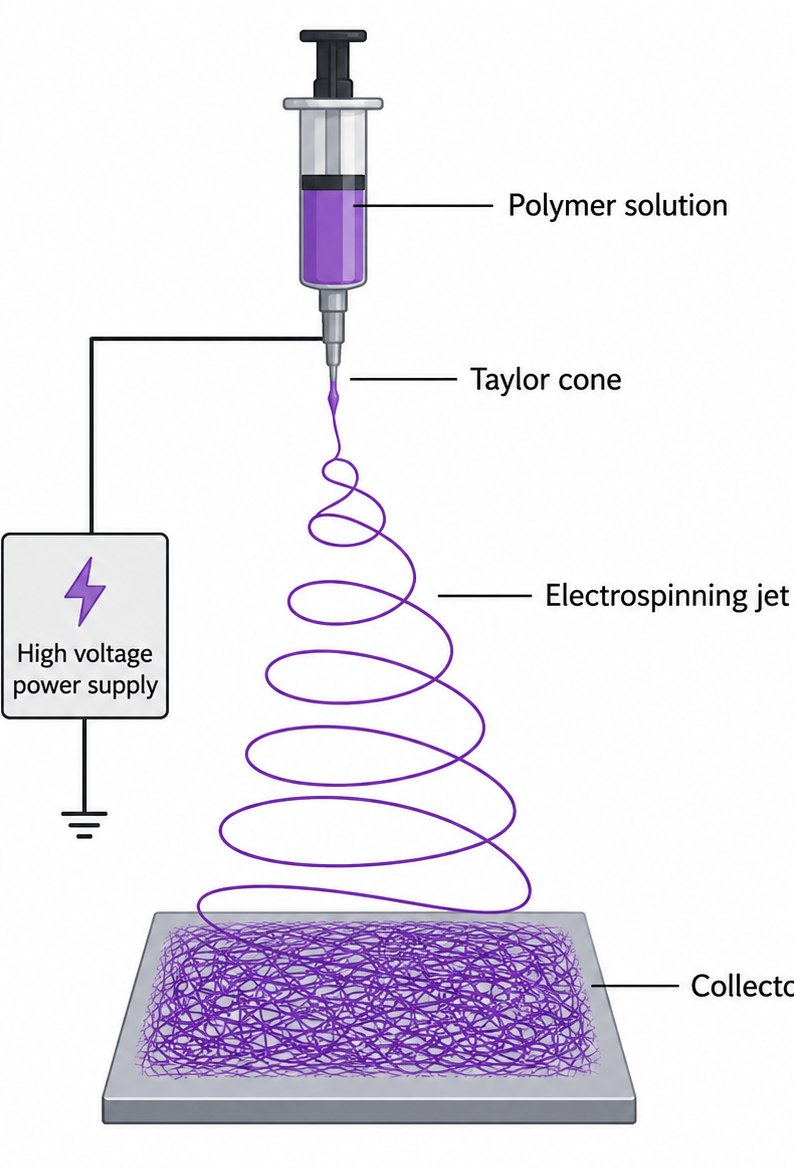
Nanofiber membranes produced by electrospinning offer an exceptionally high surface-area-to-volume ratio and a porous structure that can be tuned during fabrication. Surface chemistry and morphology are tailored so that the membrane preferentially interacts with PFAS molecules.
This makes them well suited to the selective capture, separation and pre-concentration of PFAS from dilute streams — delivering a small, concentrated volume to the degradation stage instead of a large, weak one.
Cold atmospheric plasma
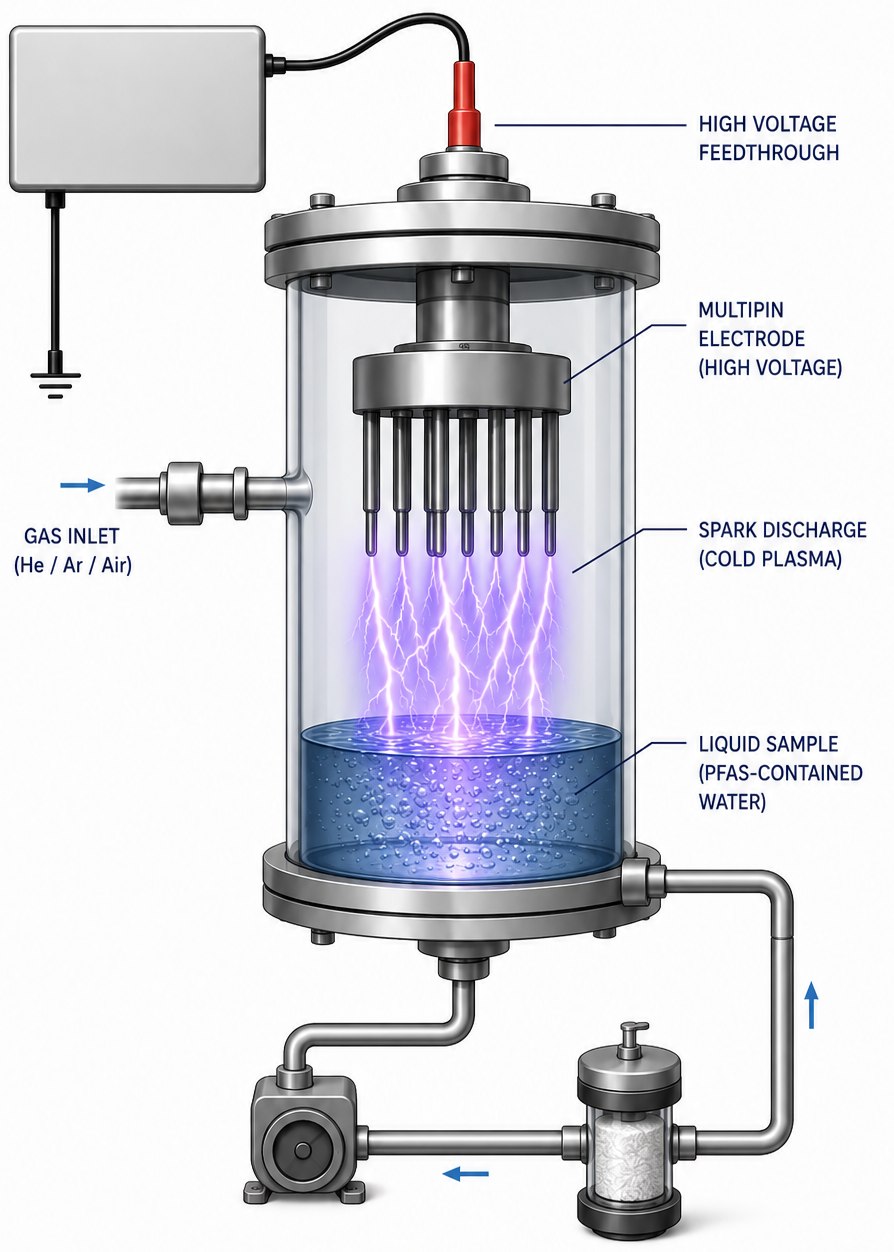
Cold atmospheric plasma is an advanced oxidation technology that generates highly reactive species, energetic electrons, UV photons and strong local electric fields under near-ambient temperature and pressure — no added chemicals, no heating of the bulk water.
Memb-CAP uses a closed spark-discharge reactor with a multipin electrode configuration, an arrangement chosen for the energy density needed to break the carbon–fluorine bonds that make PFAS so persistent.
Objectives
What the project sets out to do
The overarching aim is to develop a hybrid treatment system that integrates membrane technology with cold atmospheric plasma for the removal and degradation of PFAS from contaminated water. This is pursued through six specific objectives.
- Develop tailored electrospun nanofiber membranesDesign and fabricate membranes with surface properties optimised for the capture, separation and pre-concentration of PFAS compounds.
- Build and refine a closed cold-plasma reactorDevelop a spark-discharge reactor with a multipin electrode configuration suited to the treatment of PFAS-contaminated water.
- Integrate separation with destructionMerge membrane separation and plasma treatment into a single process enabling both PFAS retention and destructive degradation.
- Map the performance envelopeEvaluate system performance across membrane characteristics, plasma intensity, treatment duration, working gas selection and water composition.
- Elucidate degradation pathwaysInvestigate the degradation mechanisms and transformation products of selected PFAS compounds during plasma-based treatment.
- Assess sustainability and applicabilityEvaluate the Memb-CAP system as an advanced treatment technology for persistent contaminants under realistic operating conditions.
The team
Who is behind Memb-CAP
Memb-CAP is a Marie Skłodowska-Curie Postdoctoral Fellowship, hosted at the Department of Environmental Engineering and the National Membrane Technologies Research Centre (MEM-TEK), Istanbul Technical University.

Kubra Ulucan-Altuntas, PhD
Associate Professor, ITU Department of Environmental Engineering. Cold atmospheric plasma, membrane processes and advanced oxidation for persistent water contaminants.
Full bio →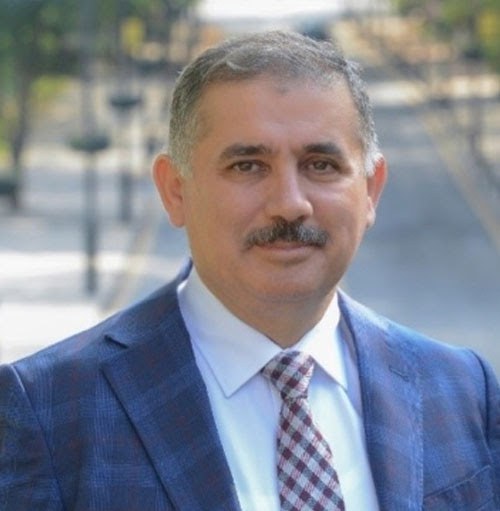
Prof. Dr. İsmail Koyuncu
Founding Director, MEM-TEK. Rector of Istanbul Technical University, 2020–2024. Membrane technologies and water treatment.
Full bio →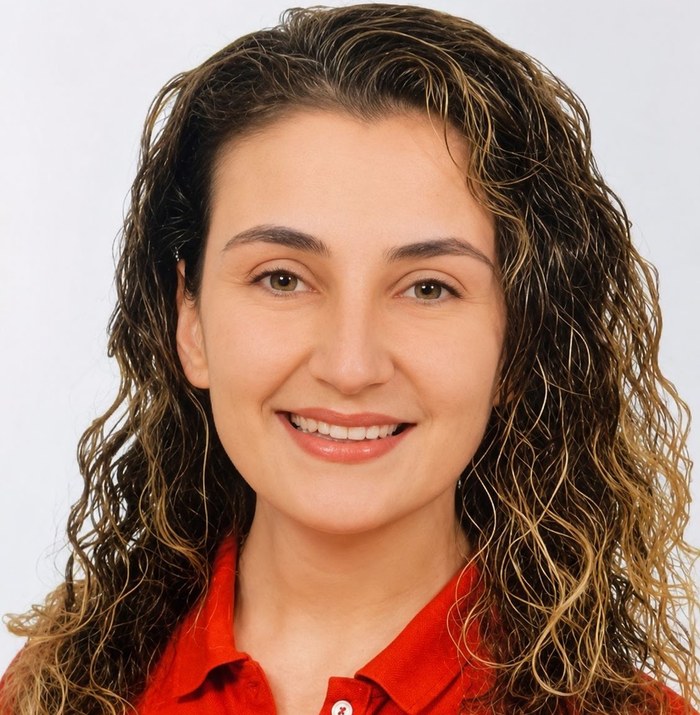
Tuğçe Akça
Research member contributing to membrane fabrication and system experiments.
M. Emir Ekim
Research member supporting laboratory work and data collection.
News
Project updates
Presenting at MELPRO 2026, Prague
New work on MXene-localized PAN-derived carbon nanofiber membranes for PFAS removal will be presented at the International Conference on Membrane and Electromembrane Processes.
Plasmera reaches the semi-final of GCIP Türkiye 2025
An entrepreneurship track built around the project's plasma-based PFAS treatment technology advanced to the semi-final stage of the Global Cleantech Innovation Programme, following a dedicated entrepreneurship training on 7 May.
Poster presented at MEMTEK 2025, İzmir
Work on boron carbide–PAN nanofiber membranes for PFOA removal was presented as a poster at the 8th International Symposium on Membrane Technologies and Applications.
Memb-CAP presented at Sardinia 2025
The project coordinator presented functionalised PAN-derived carbon nanofiber membranes for PFAS removal at the 20th International Symposium on Waste Management, Resource Recovery and Sustainable Landfilling, Cagliari, Italy.
"Science, She Says!" award, Naples
Project coordinator Kubra Ulucan-Altuntas received the "Science, She Says!" award, presented at the Capodimonte Observatory in Naples in recognition of foreign women in scientific research.
Visit to IFAT Eurasia 2025
The project coordinator, together with fellow MSCA fellows and an MSc student, visited IFAT Eurasia 2025 at the TÜYAP Fair and Congress Center to explore recent developments in water and wastewater treatment technologies.
Publications
Articles & conference contributions
Peer-reviewed outputs and conference contributions arising from the project, including work presented at the Sardinia and MEMTEK symposia.
Journal articles
In preparation — publications will be listed here as they appear.
Conference papers & posters
- Innovative Functionalized PAN-Derived Carbon Nanofiber Membranes for PFAS Removal from Aqueous Solutions. Sardinia 2025 — 20th International Symposium on Waste Management, Resource Recovery and Sustainable Landfilling, Cagliari, Italy, 13–17 October 2025.
- Boron Carbide–PAN Nanofiber Membranes: A Novel Approach for PFOA Removal. MEMTEK 2025 — 8th International Symposium on Membrane Technologies and Applications, İzmir, Türkiye, 12–14 November 2025.
- Effect of MXene Localization on the PFAS Removal Performance of PAN-Derived Carbon Nanofiber Membranes. MELPRO 2026, Prague, Czech Republic, 4–7 October 2026. (upcoming)
Funding & support
Supported by
Memb-CAP is funded by the European Union under a Marie Skłodowska-Curie Actions Postdoctoral Fellowship, hosted at Istanbul Technical University.
- Programme
- Horizon Europe — MSCA Postdoctoral Fellowships, European Fellowships (HORIZON-WIDERA-2023-TALENTS-02-01 — ERA Fellowships)
- Project title
- Development of Innovative Membrane and Cold Atmospheric Plasma Reactor for the Degradation of Per- and Polyfluoroalkyl Substances (PFAS)
- Grant number
- 101180614
- Coordinator
- Istanbul Technical University, Türkiye
- Duration
- 1 January 2025 – 31 December 2026
- EU contribution
- €148,478.40
- CORDIS record
- cordis.europa.eu/project/id/101180614 ↗
Views and opinions expressed are those of the author(s) only and do not necessarily reflect those of the European Union or the granting authority.
Contact
Get in touch
- Project coordinator
- Kubra Ulucan-Altuntas, PhD — LinkedIn ↗
- @membcap ↗
- Address
- Istanbul Technical University
Department of Environmental Engineering
National Membrane Technologies Research Centre (MEM-TEK)
Maslak, Istanbul, Türkiye
Collaboration
We welcome contact from researchers, water utilities and industrial partners working on PFAS, membrane processes or plasma-based advanced oxidation.
For research collaboration, student positions or media enquiries, please write to the project coordinator.